
Knowledge
The Evolution of the Champagne Glass
Champagne is a symbol of celebration, and its glassware is just as iconic. But how did the classic shapes evolve - and do they truly enhance the experience? From the wide coupe to the slender flute and the modern wine glass, each design tells a story. In this blog, we explore the fascinating history and science behind champagne glasses. Plus, we help you choose the best shape for every sparkling sip.
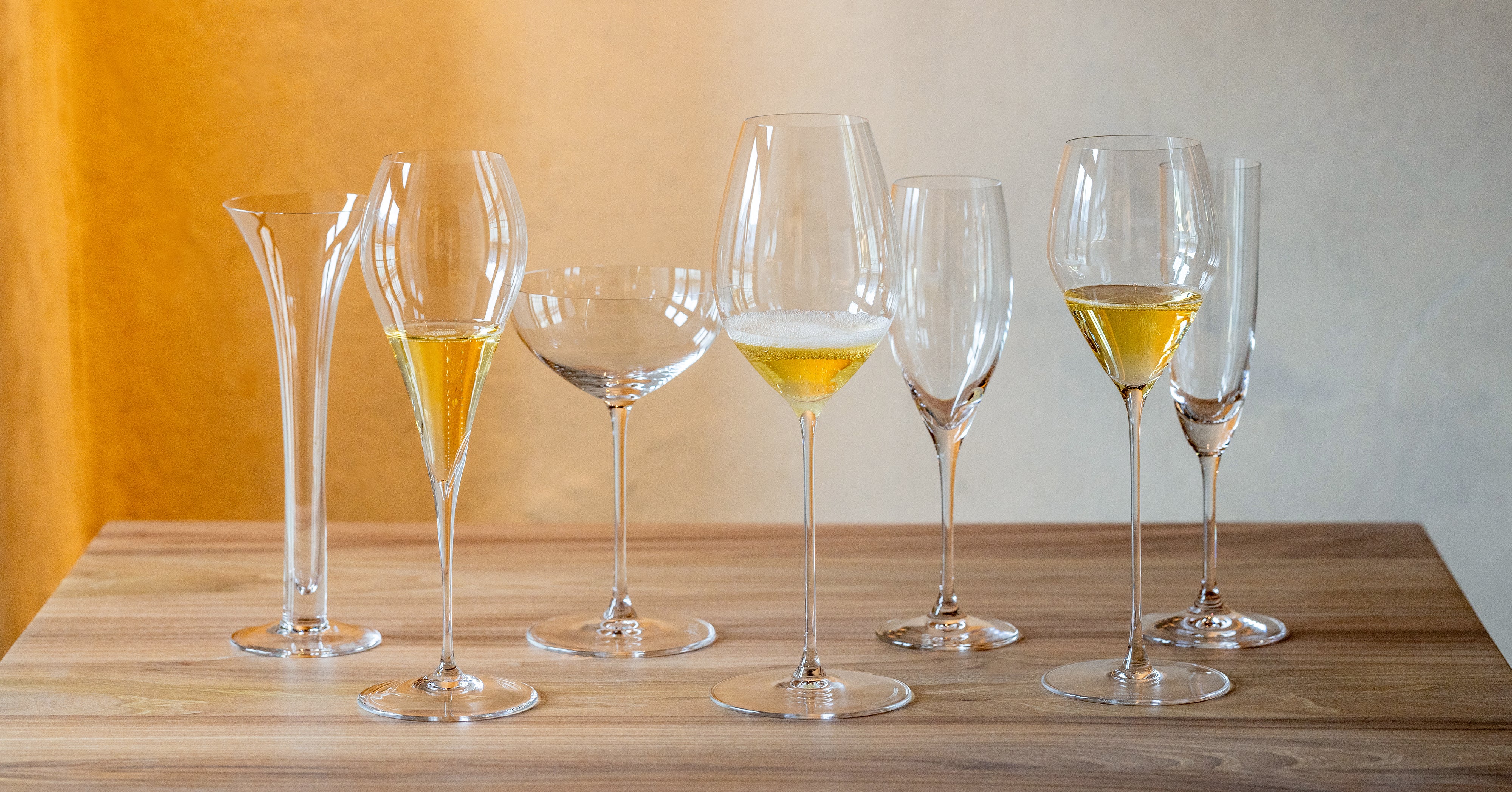
Why the Champagne Glass Shape Matters
The shape of your glass affects three key elements:
- Aroma Delivery: A wider bowl and narrower rim help concentrate delicate aromas.
- Bubble Preservation: Taller, narrow glasses help preserve the fine mousse of traditional method sparkling wines.
- Mouthfeel and Flavor: The glass’s rim and body influence how the wine hits your palate and where it spreads - impacting your entire tasting experience.
The right glass turns a good pour into a memorable one.
A Brief History of Champagne Glasses
The evolution of champagne glasses tells a story as rich and effervescent as the wine itself—one of style, science, and changing attitudes toward taste and celebration.

Vintage Glamour, Minimal Precision
The Coupe
The champagne coupe is perhaps the most romanticized glass of them all. Dating back to the 18th century and often (incorrectly) linked to Marie Antoinette’s bust, the coupe rose to fame during the roaring 1920s.
Its wide, shallow bowl was the epitome of elegance at lavish soirées and Gatsby-style affairs. But while beautiful, it wasn’t ideal for Champagne.
The large surface area allowed bubbles to escape quickly, softening the fizz and letting delicate aromas vanish before they reached the nose.
Today, it’s best used for sparkling wine cocktails or stylistic table settings—less about precision, more about nostalgia and flair.
Effervescence, Elevated
The Flute
Replacing the coupe in the late 20th century was the champagne flute - a tall, narrow vessel that retained carbonation far better. Its design channeled the stream of bubbles upward in a visual display of elegance and energy, ideal for festive occasions.
The flute quickly became a symbol of modern celebrations, thanks to its photogenic silhouette and bubble-preserving form.
However, the narrow opening doesn’t allow much room for aromas to develop, meaning you enjoy more fizz than flavor. Perfect for fresh, young Champagnes - or any moment that calls for a toast. Thanks to its slim profile, the flute is also a space-saver - ideal for venues or events where large quantities of glasses need to be stored or transported efficiently.
It’s a go-to for outdoor occasions like garden parties, where visual appeal and practicality go hand-in-hand.


Era of Appreciation
Wine Glass
As Champagne gained recognition as a fine wine, glass design followed suit. Enter the champagne wine glass - a white-wine-shaped glass, usually with an egg or diamond-shaped bowl that bridges beauty and function. With its gently curved bowl and tapered rim, this shape preserves effervescence while enhancing aroma and structure.
Favored by sommeliers and producers alike, this form lets you fully experience the complexity of Champagne - from citrus and brioche to minerality and creaminess.
For anyone looking to move beyond celebration and into appreciation, this is the ultimate choice.
Same Glass?
Sparkling Wine and Prosecco
Not quite. While all are bubbly, the style and character of Champagne, Prosecco, and other sparkling wines differ - so should the glass.
Prosecco is fruit-forward and aromatic, and benefits from a slightly egg-shaped glass to enhance its floral bouquet. Cava and other traditional method sparkling wines can be treated like Champagne and served in a wine glass to showcase their complexity.
So, are Champagne and Prosecco glasses the same? No - but some forms, especially the modern champagne wine glass, can suit both styles depending on your preference.


So, Which Champagne Glass Is the best?
If you're drinking Champagne to appreciate its full complexity - go for the Champagne wine glass. This shape allows for the wine’s layers to unfold, from citrus zest to brioche and almond. It balances effervescence with a broader aromatic spectrum. If you're celebrating a milestone or toasting with a crowd, the flute still shines. It's elegant and practical. And for vintage vibes or sparkling cocktails, the coupe is the showstopper.

